
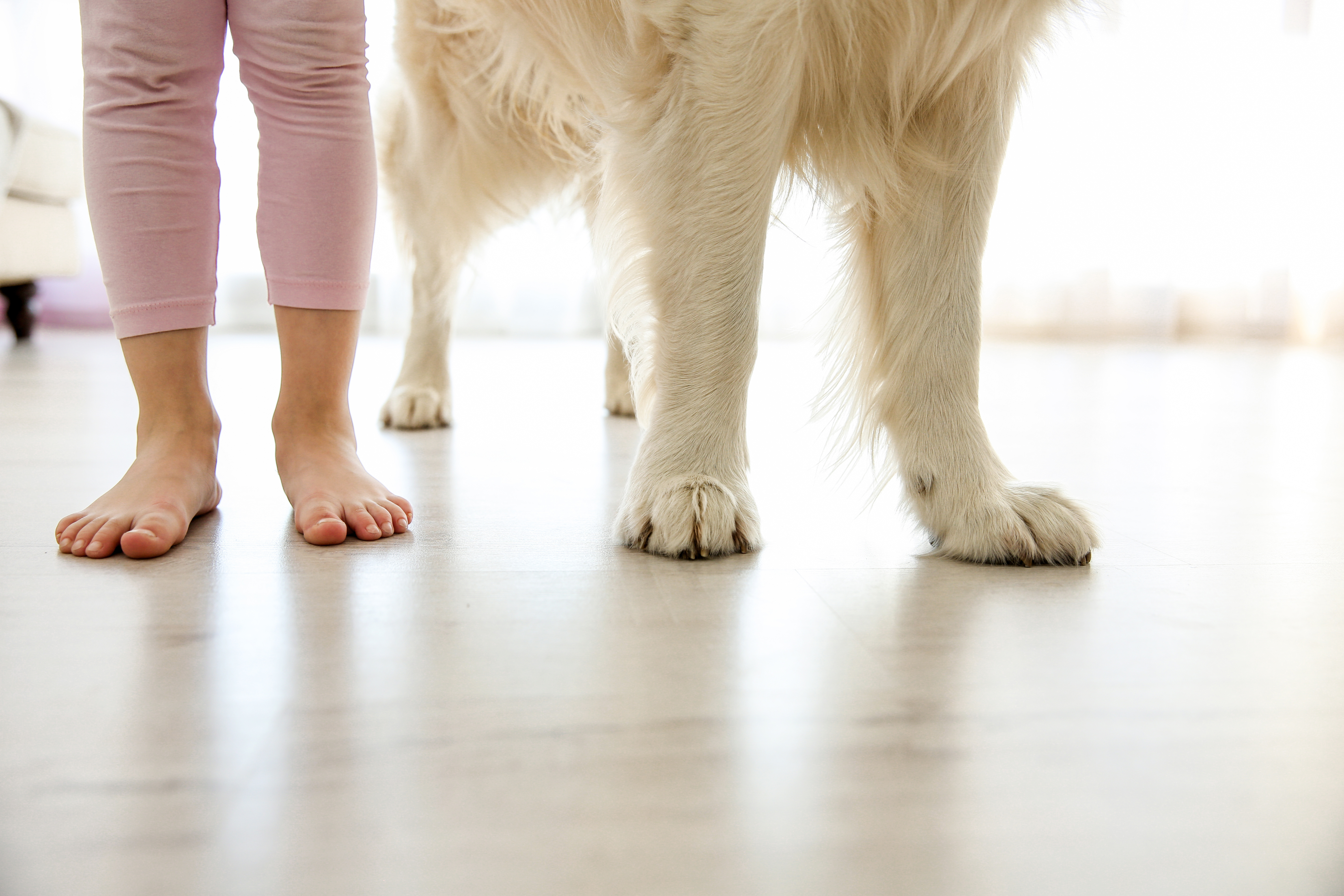
A wet dog cuts through the entry, the leash drops, and a half-second later you’re looking at muddy paw prints, a tipped water bowl, and grit tracked in from the driveway. That’s a normal day in Seattle, and it changes what “pet-friendly” really means. For most homes, the best floor is not the one that only looks good on day one. It’s the one that handles moisture, claws, cleanup, and the rhythm of real life without asking you to baby it.
Start with moisture and traction
In our climate, pet-friendly flooring starts with water tolerance. Rain jackets drip, paws stay damp, and debris settles right where dogs stop and shake off. That’s why we often steer busy households toward porcelain floor tile, especially in entries, mudrooms, laundry areas, and anywhere bowls or litter boxes live.
Porcelain is hard, stable, and easy to sanitize, but not every tile feels the same underfoot. A polished surface can look sleek and still be the wrong choice for a dog who launches around corners. We usually recommend a finish with a bit more texture so pets get better footing and you get less visible smudging between cleanings. If you want to compare broader looks and sizes, our tile selection is a good place to see what fits the room rather than chasing a trend.
Hardwood can still work with pets
A lot of homeowners assume pets automatically rule out wood. That’s too simple. Hardwood can absolutely work, but it works best when you choose the right species, finish, and board character for a house that sees daily wear.
For homes in Bellevue with dogs, we often talk first about grain and color variation. Floors with a little natural movement tend to forgive light scratching better than very smooth, uniform looks. That’s one reason many homeowners like white oak hardwood, which balances warmth, versatility, and a grain pattern that doesn’t highlight every mark the way darker, glassy finishes can.
Construction matters too, especially here in the Pacific Northwest. Seasonal humidity shifts are real, so engineered products are usually the smarter fit over solid in many main-floor and lower-level spaces. When someone wants a premium wood look that feels tailored rather than generic, we often show Appalachian’s white oak line because it gives you that elevated hardwood feel with better stability for local conditions.
Match the floor to the room, not the whole house
The biggest mistake we see is trying to force one material to solve every problem. Pets use rooms differently than people do. The kitchen may need easy cleanup around water bowls, while a living room may call for more warmth and visual softness.
That’s where a full-service plan matters. We’re not just picking samples; we’re thinking through transitions, cabinet tones, and how surfaces work together from the floor up. In remodels, tile often makes the most sense in wet zones, while wood carries comfort through the rest of the house. If you’re reworking a kitchen at the same time, our cabinet options can help tie that mix together so the result feels intentional instead of pieced together.
Don’t replace good wood if it only looks tired
Older homes in Issaquah and nearby neighborhoods often already have hardwood worth saving. Pet wear does not always mean replacement. Surface scratches, dull finish, and minor staining may be signs that the floor needs professional attention, not a tear-out.
When the boards are structurally sound, our refinishing and restoration services can bring them back and help you choose a more forgiving finish for the next chapter. That approach often preserves the character people loved in the first place while making the space easier to live in now.
The right pet-friendly floor is the one that respects your daily routine, your moisture exposure, and the rooms your animals use hardest. At E&A Pro Flooring, we help homeowners sort through those tradeoffs with real materials and real-life use in mind. When you’re ready to compare options in person, you can request a free in-home estimate.