

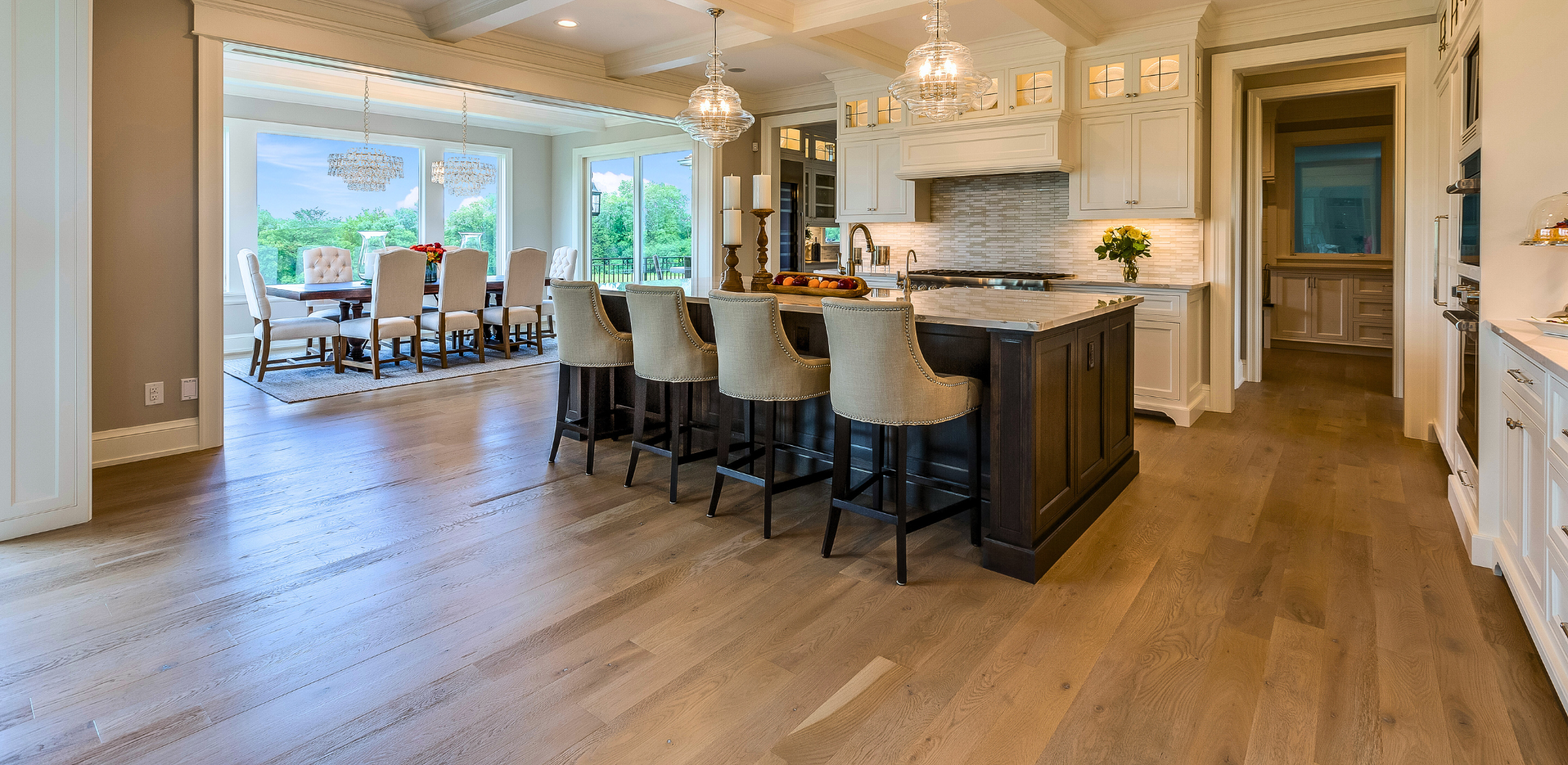
A 1950s house in Seattle can look perfectly level until new hardwood goes in and the first rainy season arrives. Then a floor that seemed tight and tidy in October starts pushing against a wall, lifting at a doorway, or separating near a heat vent by February. Most of those problems are not about the wood being “bad.” They come from movement that was always going to happen and nowhere for that movement to go.
At E&A Pro Flooring, we plan for that movement from the start. Wood expands as it picks up moisture and contracts as indoor air dries out, so every hardwood installation needs intentional spacing at the perimeter and at key transitions. Expansion joints are not a shortcut or a flaw. They are part of what keeps a floor flat, quiet, and durable over time.
Why hardwood moves in Pacific Northwest homes
The moisture pattern here is the real story. Long wet stretches, damp entry traffic, and changing indoor heat levels all affect the moisture balance inside a plank. That is one reason we often guide homeowners toward hardwood options we carry that suit real-world living, not just a showroom sample under perfect conditions.
Construction style matters too, even though species and finish often get most of the attention. In our climate, engineered boards are usually the more stable choice because their layered structure helps them handle seasonal humidity swings better than a traditional solid plank. If you are comparing formats, our hardwood buying guide helps explain how stability, width, and site conditions all work together.
Where expansion joints matter most
Perimeter gaps are the obvious part, but they are not the only part. We also look closely at long runs through open-concept spaces, transitions between rooms, and spots where wood meets tile, cabinetry, or a stair landing. The longer and wider the installation, the more important that planning becomes.
Species and plank size can raise the stakes. Wider boards tend to show movement more dramatically because each piece has more surface area reacting to indoor conditions. If a homeowner loves a premium wide-plank look, we may point them toward Appalachian white oak, where the visual payoff is strong but the layout still needs careful spacing and transition details to perform well.
Design decisions affect stability more than people expect
Expansion planning is not separate from design. It connects directly to how a home is remodeled and sequenced. In a Bellevue project, for example, cabinet footprints, island placement, and floor direction all influence where movement can happen and where it needs relief. That is one reason we coordinate flooring with cabinet selections early instead of treating them as unrelated decisions.
Transitions matter just as much in kitchens, baths, and entries where hardwood meets a more moisture-tolerant surface. Tile is often the better material at a splash-prone doorway or busy mud zone, and the joint between those materials needs to be planned so each can behave the way it should. Seeing our completed projects can help homeowners understand how those transitions look when they are handled cleanly rather than improvised on installation day.
Good planning also protects older floors
Not every project starts from scratch. In older homes around Bellevue, we often see original oak that still has years of life left, but only if repairs and movement issues are addressed correctly first. A floor that is already crowding a wall, separating at a patch, or cupping near an exterior door may need more than a cosmetic fix.
That is where a thoughtful site assessment matters. Sometimes the best path is preserving what is there through refinishing and restoration work, and sometimes replacement makes more sense because the layout cannot perform well as-is. The goal is not just a prettier surface. It is a floor that can keep its shape through the seasons.
If you want help planning a hardwood installation that stays stable through Seattle-area moisture swings, we invite you to request a free in-home estimate.