

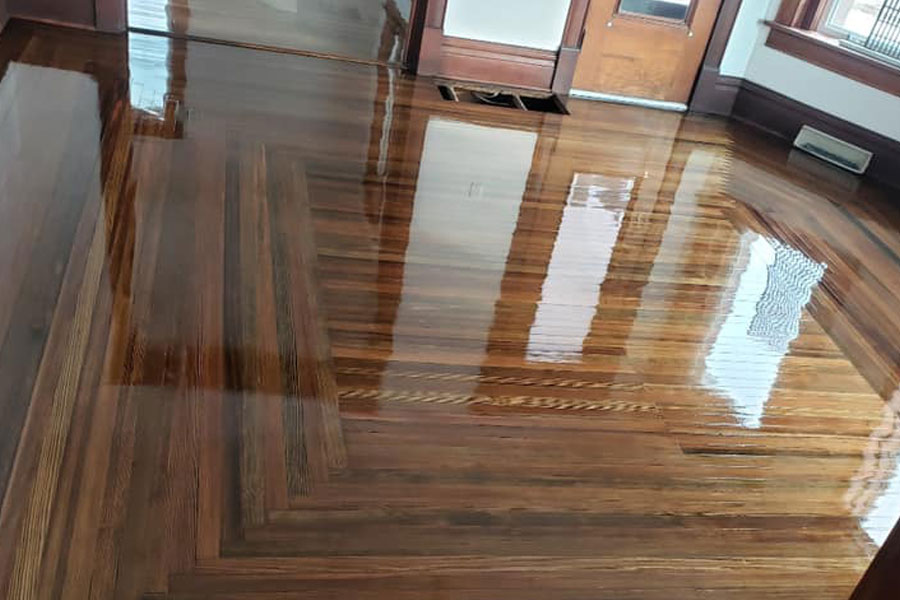
A Bellevue homeowner pulls up a rug and finds what looks like a tired old floor underneath: dull finish, scratches near the kitchen, and a few boards that seem darker than the rest. The first instinct is often replacement. But in many older Eastside homes, the better answer is less dramatic. If the wood itself is still sound, refinishing can bring it back beautifully. If the boards are failing, replacement usually makes more sense.
Start with the condition of the wood
The biggest question is not how the floor looks today. It is whether the boards still have enough life left in them. Surface wear, faded stain, light pet scratches, and small dents usually point toward hardwood refinishing and restoration, especially when the floor has solid bones and only the top layer is tired.
Replacement becomes the better route when the damage goes deeper. Boards that are badly warped, soft from long-term moisture exposure, split through the tongue and groove, or patched so many times that the room has lost continuity often cannot be rescued in a way that feels worth the investment. In those cases, starting over gives you a cleaner result and a more predictable installation.
Moisture changes the decision in our region
In the Pacific Northwest, moisture is rarely a side note. It is often the deciding factor. A floor near an entry, kitchen, or lower level may show wear that looks cosmetic at first, but if seasonal humidity or repeated wet traffic has affected the planks, refinishing alone will not solve the root problem.
That is where replacement can open better options. Many homeowners want the warmth of wood with more stability than older site-finished floors offered, so we often walk them through engineered hardwood choices that handle normal indoor moisture swings more gracefully. If you love a clean Northwest look, white oak floors remain a favorite because they work well with both classic and more contemporary interiors.
Age, repairs, and layout matter too
A floor can be old without being finished. In fact, some of the best candidates for refinishing are original hardwoods in Kirkland and nearby neighborhoods where the wear is honest but the material underneath is still excellent. When the thickness is there and the boards lie flat, sanding and recoating often preserves character you simply cannot fake with something brand new.
On the other hand, a room with mismatched additions, numerous board replacements, and awkward transitions may benefit more from a fresh start. That is especially true when you are already changing cabinetry, walls, or room flow. In a larger remodel, flooring decisions should work with the whole design, not sit apart from it, which is why we often coordinate wood selections alongside cabinet styles so the final palette feels intentional.
Replacement is not always a last resort
Some homeowners hear “replace” and assume that means giving up on quality. We see it differently. Sometimes replacement is the smartest long-term choice because it lets you fix subfloor issues, improve continuity between rooms, and choose a product better suited to how you live now. If you want to compare species, widths, and finishes side by side, browsing the hardwood we carry can help you narrow your direction before we look at samples together.
At E&A Pro Flooring, we usually guide this decision by asking a few practical questions: Is the damage mostly on the surface, or in the boards themselves? Has moisture changed the shape of the floor? Are you preserving a home’s character, or reworking the entire space? The right answer is the one that solves the actual problem, not just the visible symptom.
If you want help deciding whether your existing floor should be saved or replaced, request a free in-home estimate.